“Now this is not the end. It is not even the beginning of the end. But it is, perhaps, the end of the beginning.”
Winston Churchill, The Lord Mayor’s Luncheon, Mansion House, November 10, 1942
With the victories in Casablanca, Algiers, and Oran. The Allies were able to change the tempo of the war in their favor. Operation Torch continued beyond the three cities it initially sought to take with the recovery of Tunis and further operation in Libya and then Egypt. A few months after the initial landings, Allied leaders were able to meet and strategize in Casablanca to determine the course of the war
It is safe to say that the success of Operation Torch began the unravelling of Axis dominance in the Mediterranean and later offered the Allies opportunities to go to Europe through its underbelly. As a Result of Operation Torch, the Allies also gained valuable experience in large scale amphibious operations. This would prove invaluable for the landings in Italy and Normandy later in the war which sealed the fate of the Axis powers.
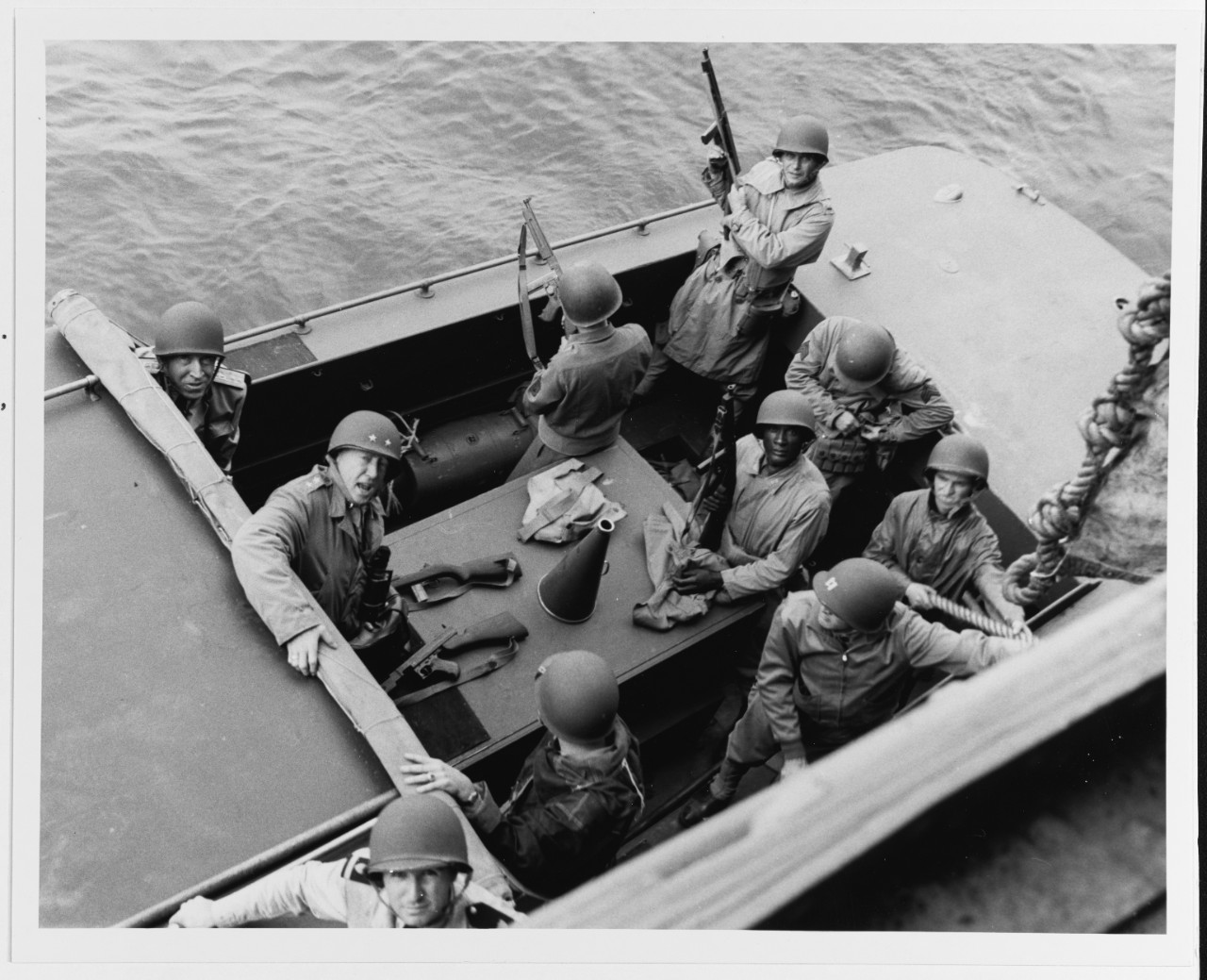
Major General George S. Patton, U.S. Army (left center) and Rear Admiral John L. Hall, USN (behind Patton) prepare to go ashore during the North African operation. National Archives 80-G-30122.
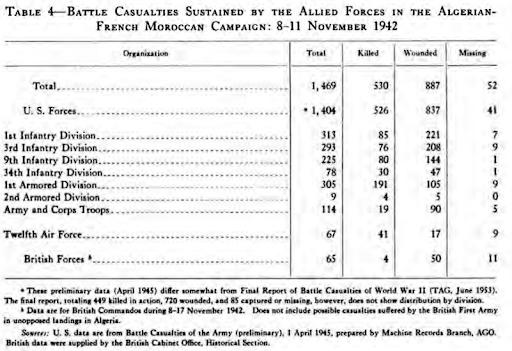
Despite the successes of Operation Torch, it is important to remember the casualties. The Allies reported 1469 casualties. Over 95% of Allied casualties in Algiers, Casablanca, and Oran were American. These figures don’t consider losses of supplies, vehicles, and other equipment. Although Axis figures are not as clear, many French soldiers chose to surrender when surrounded by American forces. The city of Casablanca, for example, surrendered before Americans committed to what would have undoubtedly been a very bloody engagement.